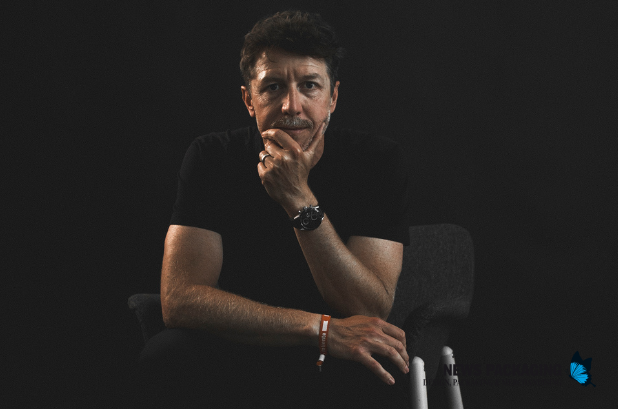
Brandsummit specializes in branding, packaging, interior, and digital design for food and beverage brands. Based in Valencia, they work with clients worldwide and have been recognized as Food Design Thinkers since 2014.
What led you to create Brandsummit?
I always say I was born next to a label machine. Our family business, Etygraf, a continuous self-adhesive label factory, is two years older than me, so graphic arts and packaging have always been a part of my life.
I was working as a marketing and sales manager when I started to realize something: many of our clients—mostly in the food sector—were asking me for advice about their branding and communication. Not just about labels. About the brand itself. I saw two things at once: a real business opportunity and a natural area of expertise. I knew the sector, I knew the product, I knew the production constraints. Perhaps what was missing was someone to bring all of that together with a strategic brand vision.
That's how I started Brandsummit, completely alone and with the idea of creating food brands by combining strategy and execution. And that idea has evolved into what we are today, a balance between consulting and research.
Why have you decided to specialize in food and beverages? Have you considered creating packaging for other sectors?
Specialization was a decision based on positioning and knowledge, but also a natural focus for me: I understand packaging perfectly, I love the battle on the shelf, and I'm passionate about the decision-making behind brands. When you know a sector in depth—its categories, its purchasing dynamics, its production constraints, how the consumer behaves in front of the shelf—you can contribute something a generalist can't: specific criteria before any design piece even exists.
I'm often contacted to work in other sectors. But every time we analyze it, we reach the same conclusion: our real competitive advantage lies in depth, not breadth. More than twelve years, more than 170 brands, a single sector. That's not built by opening the door to just any project.
Do you think this is the sector where the most innovations in packaging design occur?
It is undoubtedly one of the most demanding sectors. Food packaging has to simultaneously solve problems that in other sectors are independent: communicate in two seconds, stand out on a saturated shelf, comply with strict regulations, function in different formats and channels, and do so with cost constraints.
That pressure drives innovation. But what interests me most isn't formal innovation—the striking packaging—but strategic innovation. Packaging that solves a business problem no one had been able to articulate. That's what we strive for in every project. Through our packaging expertise, we can reduce our clients' production costs by optimizing systems and processes.
The food industry is undergoing a transformation driven by sustainability, health, and changing consumption habits. How are these trends influencing packaging design?
They're redefining the rules of the shelf. Today's consumer reads packaging differently; they practically read it, whereas before they rarely did. They're looking for real information, not empty promises. Furthermore, we have much more information and knowledge about food, nutrition, and production processes. Transparency—regarding ingredients, origin, and impact—has gone from being a differentiator to a necessity.
What's changing our work the most isn't the aesthetics, but the questions we ask at the beginning of each project. Before, the question was how to differentiate ourselves visually. Now it's what values this brand has that are credible, verifiable, and relevant to the consumer. Design comes later. Always. That's partly why our slogan is Food Design Thinkers.
¿Do they apply ecodesign criteria? Is it more difficult to create sustainable packaging with tight budgets?
For me, sustainability in packaging involves two distinct conversations that are often confused.
The first is materials: recyclable and reusable packaging, reduced plastic use, renewable materials… We work closely with specialized suppliers, and in many projects, we incorporate these solutions from the very beginning of the process, not as an add-on at the end. It has to be tied to the brand strategy, not just the packaging.
The second, and often overlooked, aspect is the optimization of resources and production processes. In many projects, we've managed to significantly reduce costs for our clients simply by reviewing and grouping formats, weights, and printing processes. As an industrial engineer, I'm familiar with production systems in packaging plants and how to optimize resources through packaging. Well-engineered packaging is sustainable by definition; it doesn't use more than necessary.
Is it more difficult with tight budgets? It depends. Sometimes budget constraints force smarter decisions. The luxury of spending more doesn't always produce better results, nor does it always lead to greater visibility or sales growth.
Typography and color feature prominently in many of their designs. Do they consider themselves positive disruptors?
I don't like the word "disruptors" applied to brands. It sounds like a trend, and what we do is the opposite: making decisions that stand the test of time. Isn't there a business behind every brand?
What we are, however, is consistent. Every typographic and color decision in our projects is based on a strategic argument rather than an aesthetic one. What position does this brand occupy in its category? What does it need to communicate in the first second of contact with the consumer? What is the competition doing, and what space is left open?
When those questions are answered correctly, typography and color are not design decisions. They are business decisions.
Tell us about two of your projects.
Two current projects where packaging is the main focus.
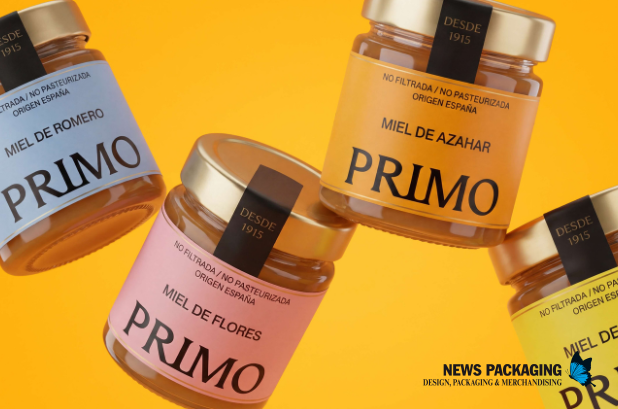
PRIMO: From 8 scattered brands to the coherence of an umbrella brand. Primo Mendoza SL had been in the honey sector for over 100 years with a problem no one had been able to solve: 8 active brands, more than 150 packaging options, and none that bore the company name. The result was confusion on the shelf and in negotiations, and a company with enormous value that the market failed to recognize.
Our first decision was strategic, not visual: to propose an umbrella brand that would unify everything under a single name. The solution had been in front of them for a century: the family name. PRIMO.
The packaging work involved creating coherence among more than 150 products that must function both individually and as a system. Each product is recognizable on its own, forming product families based on beekeeping specialties. All are recognizable as PRIMO. This balance between unity and variety is one of the most complex challenges in mass-market packaging.
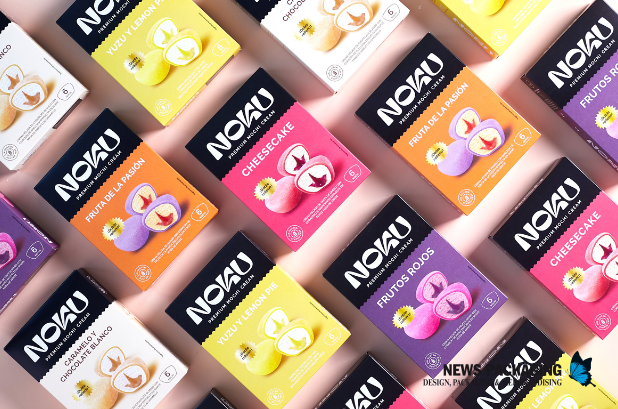
NOKU: the brand that (almost) convinced Unilever. Noku is a mochi brand—the Japanese rice dessert—that we built from scratch six years ago and continue to work on today. Positioning, naming, identity, packaging, website, content, communication, and events. Everything.
The most revealing aspect of this project came when the giant Unilever showed interest in acquiring the brand. During the negotiation process, we received direct feedback on the packaging: what worked and what needed to be more impactful to compete globally. We made adjustments, obviously. That conversation with one of the world's largest consumer goods groups was the best validation that the decisions we had made were the right ones.
Today, Noku offers eight flavor options and is available in more than 10 countries, with adaptations to the corresponding languages. It's a project where the order and consistency of the packaging system have been as important as creativity.
What is the state of design in our country?
There is a gap that is closing but still exists. Spanish food companies have significantly improved their understanding of brand value in recent years. More and more decision-makers understand that packaging is not a production cost but a business investment.
What's still lacking, in many cases, is understanding the difference between design and brand strategy. Design is commissioned when the problem is positioning. Packaging is changed when the problem lies in product range architecture. This confusion between symptom and cause is what leads to many design investments failing to produce the expected results. Design without strategy—with all that this implies in terms of positioning, target audience, distribution, and communication—is no longer enough.
What trends are observed in packaging design?
Packaging trends have a problem: by the time they become visible, they're already too late. The minimalism we see today saturating store shelves is a response to a trend from five years ago.
What we're seeing in cutting-edge projects is a return to character. Brands that don't try to please everyone, but instead precisely target their consumers. This is sometimes minimalist and sometimes expressive; it depends on who the brand is, who the consumer is, and how they connect.
In terms of materials, the direction is clear and irreversible. The question is no longer whether to incorporate sustainability criteria, but how to do so without compromising brand communication or the project's economic viability.
Do awards and international recognition help, or do they not have an economic return?
We have two Pentawards and more than twenty national and local awards. And I have an honest answer about their true value.
Awards provide confidence. Both for us as a team and for the client considering us. When someone comes to Brandsummit without prior knowledge of us, knowing that our work has been internationally recognized reduces the friction in the decision-making process.
But our main endorsement doesn't come from awards. It comes from recommendations from other clients. That's the most valuable return there is, and one that no award can replace. At the end of the first session, we always ask how they heard about us, and that's one of the most common answers.
To what extent do new technologies like AI have an influence?
AI is changing the speed of execution because it's such a powerful tool. What used to require days of visual exploration can now be generated in hours. That has a real impact on how we work—it frees up time for things AI can't do.
And what AI can't do is precisely the most valuable part of our work: understanding the business problem behind the project, questioning the brief, making strategic decisions the client hadn't considered. AI executes. We decide what needs to be executed and why. I insist, it's a very powerful tool. And we use it extensively, in most phases of our own brand-building process.
If AI has done anything for our positioning, it's made it clearer. In a sector where visual execution is increasingly automated, prior strategy becomes more valuable, not less.
What are your next projects?
We never discuss the brands we work with until they're on the market, due to confidentiality and competitive reasons, so I won't mention any specific brands. But currently, we're working on a major international project for a leading brand with a presence in over 12 countries. The project includes more than 30 packaging designs adapted to each market and language. Before making any design decisions, we interviewed key global distributors to understand how the product performs in different cultural contexts. We also worked directly with printers in each region to validate and standardize colors and quality, because a packaging solution that works in Spain might not be reproducible in another market.
It's the kind of project that sums up well what we do: the complexity is not in the design but in the prior decisions that make the design work in any context.