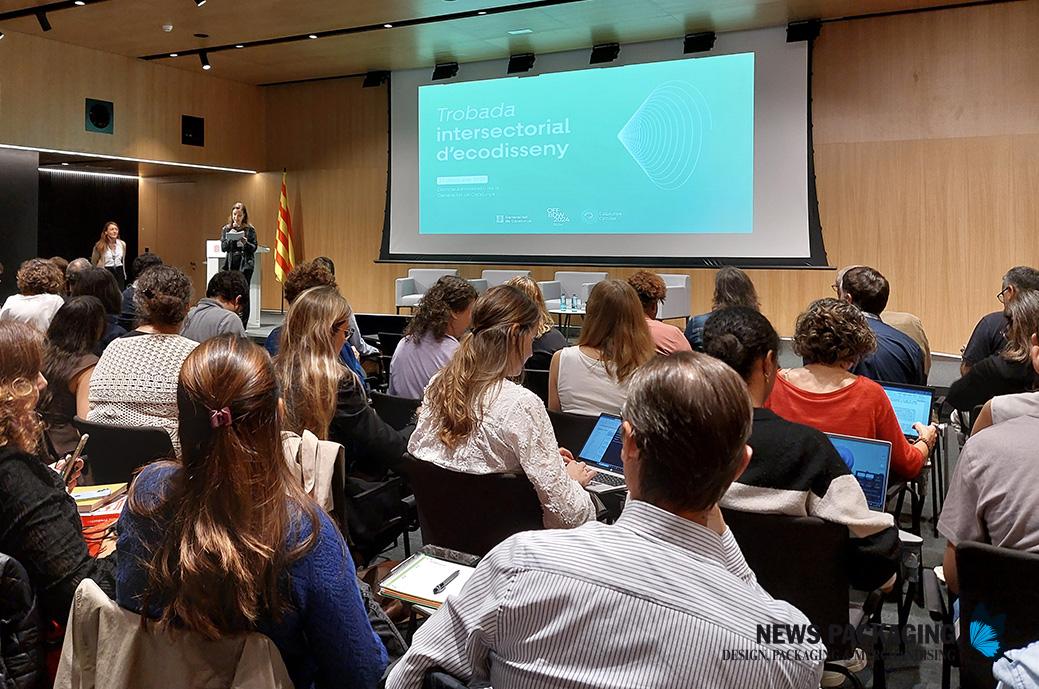
On October 22nd, the Intersectoral Ecodesign Meeting was held in Barcelona , as part of Barcelona Design Week , the annual event on design and creativity in the Catalan capital, created in 2006 by the Barcelona Centre de Disseny. Topics discussed included the new ecodesign regulations, strategies and success stories, and the digital passport, with the participation of professionals from various sectors.
The event began with a welcome and presentation of the day by Sonsoles Letang , Director General of Climate Change and Environmental Quality of the Department of Territory, Housing and Ecological Transition of the Generalitat of Catalonia, who stated that "ecodesign plays a fundamental role, it is a key piece because it allows reducing the impact of products from their creation."
Next, Irene Mataró, an environmental lawyer from Terraqui , spoke about the new ecodesign regulation , which includes new features focused on making products more sustainable. Specifically, Regulation (EU) 2024/1781 of the European Parliament and of the Council of 13 June 2024 establishes a framework for setting ecodesign requirements for sustainable products. The priority products are: textiles and footwear; furniture and mattresses; tires; toys; plastics and polymers; chemicals, aluminum, iron and steel; paints and lubricants; other energy-related and ICT-related products; and detergents.
What will this regulation entail? “A new scope and new aspects of sustainability and design,” said Irene Mataró, as well as “greater harmonisation” (common eco-design requirements are established for similar products). Mataró also pointed out the importance of information obligations: digital passport and requirements regarding labels and product information. “Companies will have to adapt to the new eco-design regulations,” she added.
As for the timeframe, it came into force in July this year and the first work plan must be adopted before April 2025; not before July 2025, when the first delegated act with eco-design requirements comes into force.
Ecodesign strategies
Next, Sofía Garín, from Inèdit , spoke about the theoretical framework of ecodesign strategies. Sustainability operates on three fundamental pillars: environmental, social, and economic; “it’s important to maintain a systemic vision,” said Sofía Garín. Furthermore, “we must always keep the value chain in mind,” she added. It’s important to have greater control over raw materials, more transparency and traceability, and to offer innovative and sustainable value propositions. We must also consider other aspects: recycling, reuse, servitization, collaborative consumption, and maintenance/repair. “Including services is very important, as is a systemic vision to extend the product’s lifespan,” she stated.
Afterwards, there was a round table discussion in which several success stories were presented, with the participation of: Xavier Papiol, CEO of Cumellas; Carlos Jiménez, Head of Circular Innovation at Lúcid; Ignasi Llauradó, founder and creative director of DearDesign Studio; and Jaume Simonet, R&D director of Girbau . Xavier Papiol spoke about his Trencadís project, a collection of modular rugs made to measure from pre-consumer carpet scraps, designed in collaboration with the Nutcreatives studio.
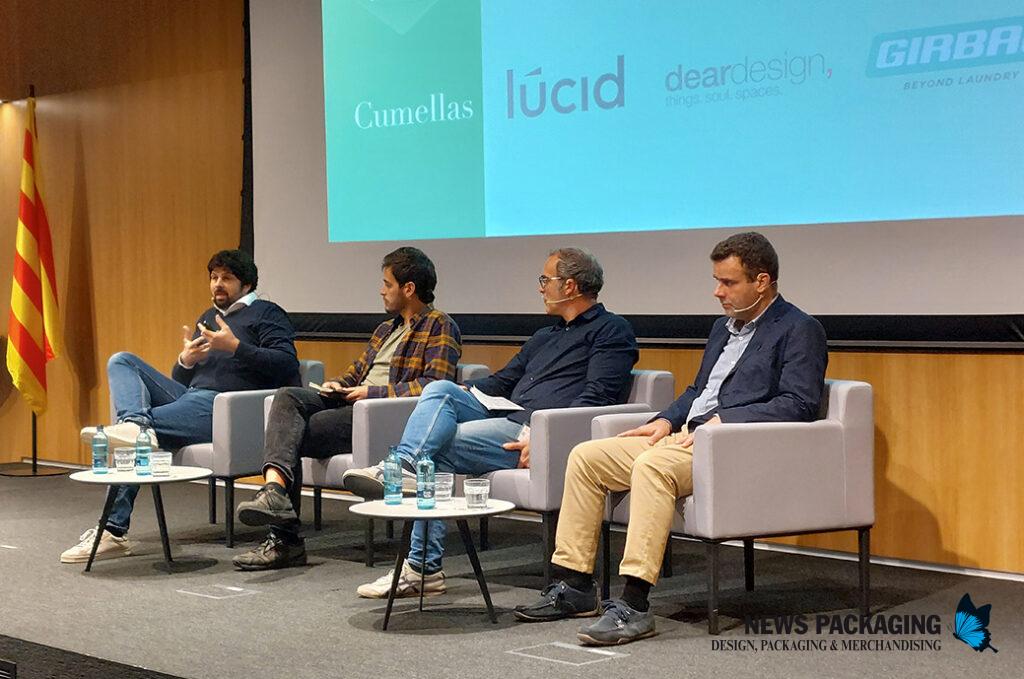
Carlos Jiménez explained the circular redesign of the DBOX5, the “brain” of the photovoltaic parks, which has achieved a -18% carbon footprint compared to the previous version, as well as a -22% total dismantling time and a -16% unit cost.
Ignasi Llauradó, from the interior design studio specialising in design, spoke about the first project in 2017 to develop high-end eco-designed furniture. In the work carried out at the Mansartis offices in Paris, 70% recycled and reused material was used. “80% of the environmental impact is in the design, which is why it is so important,” he said. He also spoke about upcycling/waste diversion: analysing recycled material, how to transform the material and give it a new use, checking the life cycle of new materials (with certification) and thinking about subsequent dismantling.
Finally, Jaume Simonet from Girbau, a specialist in laundry solutions, spoke about the Genius washing machine, the new Girbau machine platform, where they seek to be a benchmark in: efficiency and sustainability, IoT connectivity, robustness and reliability, and ergonomics and user experience. They have used painted lids instead of pre-coated ones and have reduced packaging materials, especially plastics.
The Digital Product Passport
Following a dynamic session led by Inèdit, Adriana Sanz, from Inèdit , discussed the key points for implementing the Digital Product Passport, a new tool that will allow for the collection and sharing of product data throughout its lifecycle. The minimum required information will be defined in a specific delegated act for each product group. It will be linked to a unique product identifier and will be available in various formats: barcode, QR code, and NFC technology.
The European Commission proposes its implementation to support transparency, traceability of materials, data exchange and sustainability throughout the entire life cycle of products.
The information it will contain will include product identification, materials and processes, sustainability data, and manuals and instructions.
In terms of timetable, following the CIRPASS initiative (2022-2024), the first work plan will be adopted in 2025; the first measures are expected to be adopted in 2026, with the publication of delegated acts; in 2027, the digital product passport is mandatory for batteries; in 2028 and 2029, new delegated acts will be published, and in 2030 the passport would be mandatory for textiles.
After her presentation, Adriana Sanz spoke with Elena Badía from Inèdit and Albert Pablo from Nomon , who talked about their experiences.
Finally, Mireia Padrós , a technician from the Prevention and Resource Efficiency Department of the Catalan Waste Agency , presented the guidelines for the 2025 Catalonia Ecodesign Awards , which primarily recognize the incorporation of ecodesign strategies and contributions to the circular economy, design quality, and innovation. The awards are aimed primarily at designers, product manufacturers, and students based or studying in Catalonia and are held every two years.
They consist of three categories: Category A – Best Product Award (15.000 euros); Category B – Best Product in Development Award (15.000 euros) and Category C – Best Young Design Award (3.000 euros). Registration for the first two categories is open until November 8 this year, while for Category C it is from January 14 to February 14, 2025.