Tetra pak closed 2020 successfully meeting the climate objective established for that year: reduce CO emissions2 into the atmosphere at the levels collected in 2010 throughout the value chain. In fact, the company managed to reduce its total emissions by 19% globally (scopes 1, 2 and 3), despite the business growth experienced in the last decade.
This information is derived from the 2021 Sustainability Report, which includes all the commitments and progress made by the company on its way, not only towards carbon neutrality, but also towards a sustainable transformation of the industry. The so-called 2030 Strategy, inspired by the UN Sustainable Development Goals (SDGs), guides the company's work on sustainability, working in four areas of collaborative innovation that apply to the entire value chain: renewability and decarbonization of materials, decarbonization of the value chain, ensuring greater access to food and reduction of food waste, and recyclability and circularity.
Explains ramiro ortiz, CEO of Tetra Pak Iberia, “We have long focused on an innovation path driven by renewability and recyclability, to ensure the decarbonisation and circularity of the materials we use in our packaging. We are in the task of accelerating the recycling of carton packaging on a global scale, as well as innovating to create the most sustainable food packaging in the world - a carton made entirely of renewable or recycled materials, recyclable and carbon neutral » .
Environmental improvements at the Tetra Pak factory in Spain
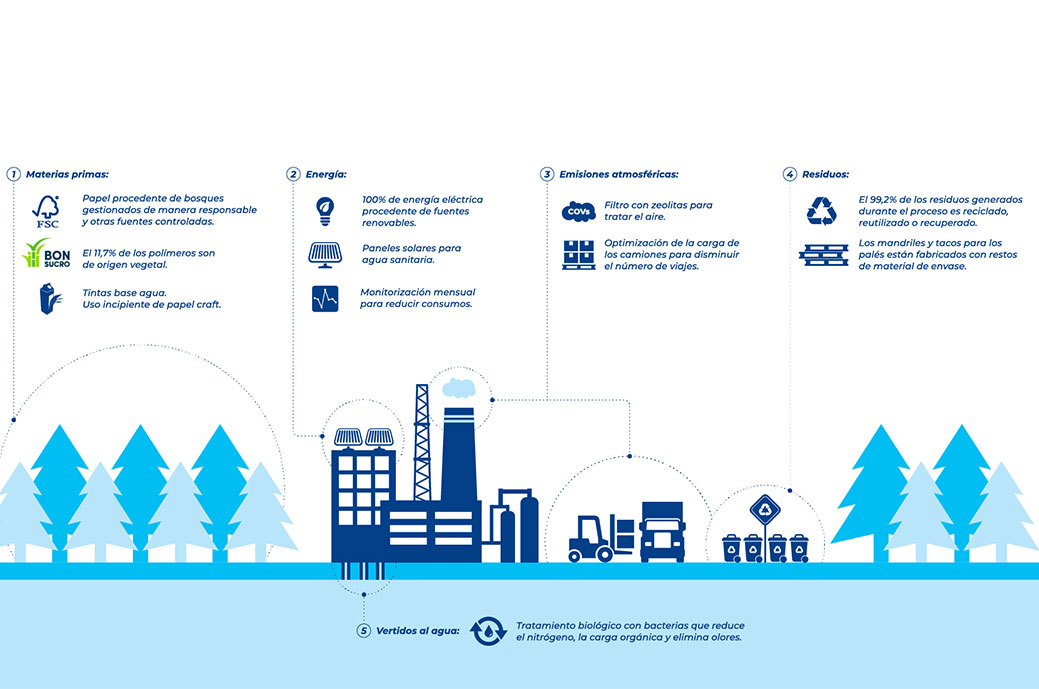
In Spain, different measures have been implemented to improve the environmental profile of the packaging factory that Tetra Pack has in Arganda del Rey, in Madrid, mitigating the environmental impact of raw materials, reducing the consumption of energy and other natural resources, and minimizing the generation of waste, spillage and other emissions.
100% of the electrical energy used in the Tetra Pak factory in Spain comes from renewable sources. The use of polyethylene of vegetable origin in the factory has increased notably since 2018, reaching 11% of the total in just two years.
The Tetra Pak factory in Arganda del Rey recycles, reuses or recovers 99,2% of the waste generated during the manufacturing process. In addition, the mandrels and blocks for the pallets are made from the remains of packaging material from factory waste, favoring the circular economy.
Regarding emissions and discharges, in 2019, a project was concluded to improve the Zeolite emissions purification system, with which the fumes are purified before they are emitted into the atmosphere. Water discharges are also treated before being sent to the sanitation network. For sanitary waters, a biological treatment with bacteria has been successfully tested, the purpose of which is to reduce nitrogen and the organic load of the wastewater, while eliminating odors.